Men’s Mental Health Awareness Month: Supporting the Next Generation of Boys
Published on: November 2, 2026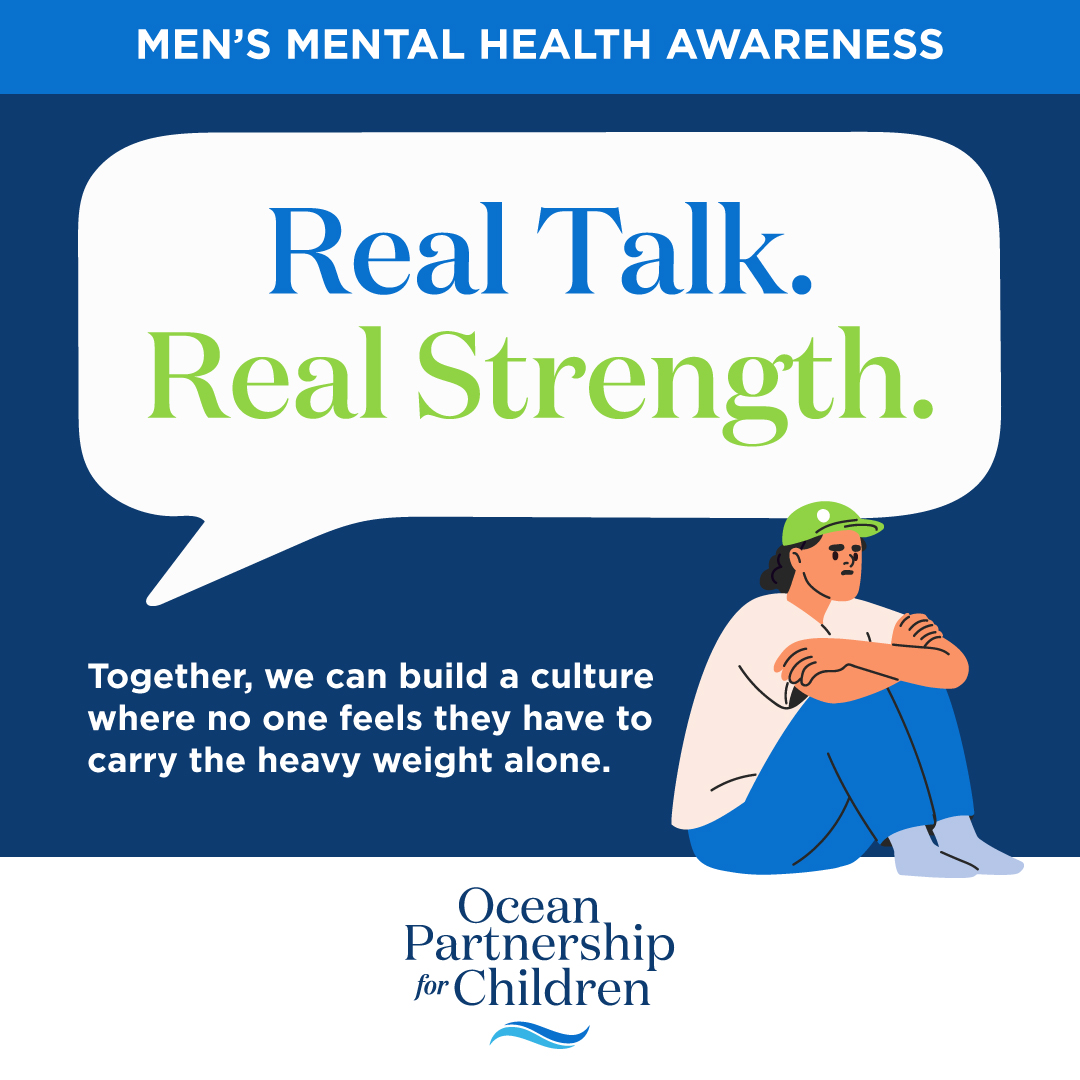
Every November, Men’s Mental Health Awareness Month shines a light on conversations that have historically been overlooked. While discussions about men’s mental health often focus on adults, it is equally important to recognize that many of the beliefs, pressures, and challenges associated with mental health begin during childhood and adolescence.
At Ocean Partnership for Children (OPC), staff see firsthand how mental health affects youth and families throughout Ocean County. As a Care Management Organization (CMO) serving approximately 1,100 youth each month with mental health, behavioral, substance use, developmental, and legal system involvement needs, OPC understands the importance of helping young people develop healthy coping skills, positive relationships, and the confidence to express their emotions.
Why Boys’ Mental Health Matters
For many boys, expressing emotions does not always come easily. Society often sends messages that boys should “tough it out,” hide their feelings, or handle emotional pain on their own.
“I think boys in our society have been taught to withhold their emotions, to not express their emotions in a healthy capacity, and to deal with their emotions through aggression,” says Sean Giarratana, Care Manager Supervisor at OPC and Lead Facilitator of the Game Changers group. “A lot of this emotional baggage is internalized and manifests in different ways.”
When boys struggle to communicate what they are feeling, mental health challenges may appear differently than many people expect. Rather than openly expressing sadness or anxiety, youth may become withdrawn, irritable, aggressive, or engage in bullying behaviors.
Recognizing the Signs
Early intervention starts with recognizing when a young person may be struggling.
“Some warning signs that a boy is struggling with their mental health are silence, refusing to talk or demonstrate emotion, aggression toward others or themselves, bullying, and low self-esteem,” Giarratana explains.
Parents, caregivers, teachers, coaches, and mentors can play a critical role by creating environments where boys feel comfortable expressing themselves without fear of judgment. Opening the door to honest conversations about emotions can help reduce stigma and encourage youth to seek support when they need it.
Creating Safe Spaces Through OPC’s Youth Empowerment Program
At OPC, helping youth build social-emotional skills is a key component of the mission. Through OPC’s Youth Empowerment Program, youth throughout Ocean County have access to a variety of workshops, leadership opportunities, and support groups designed to help them develop confidence, resilience, and healthy coping strategies.
One of these programs is Game Changers, a Boys Social Emotional Learning (SEL) group specifically designed for youth ages 11-14.
The group focuses on helping participants strengthen communication skills, build healthy relationships, improve emotional awareness, and develop positive ways to manage stress and challenges. Through interactive activities, team-building exercises, and guided discussions, youth learn skills they can carry into school, family life, friendships, and future adulthood.
“The opportunity for boys to express their feelings, be vulnerable, and have awareness is integrated into everything that we do,” says Giarratana. “We help create an environment that’s safe for them.”
The impact of the program is reflected in the voices of participants themselves. One youth shared, “I learned how to be more communicative and learned how to make new friends and how to get along and respect.” Another participant reported, “I do feel more confident and I make more friends now and can communicate with others perfectly fine.” These experiences highlight the very skills Game Changers is designed to strengthen: communication, confidence, friendship, and respect for others.
Learning They Are Not Alone
One of the most powerful lessons boys learn through Game Changers is that their experiences and feelings are often shared by others.
During one activity, participants are invited to step into a circle if they have experienced certain emotions or challenges. The exercise helps youth recognize common experiences and build empathy for one another.
“Oftentimes most of the group will step in,” Giarratana says. “That gives an opportunity for kids to have awareness that it’s not just them that feel this way. There are other boys that have the same feelings.”
As relationships develop within the group, many participants report feeling more comfortable connecting with peers. One youth noted, “Yes, I feel more confident talking and meeting new friends.” Through shared experiences and supportive discussions, boys learn that vulnerability, empathy, and friendship can be strengths rather than weaknesses.
Building Confidence Through Connection
While social-emotional learning is central to the program, Game Changers also incorporates engaging activities that help youth connect in meaningful ways. Participants regularly take part in team-building exercises, outdoor recreation, and cooperative challenges that encourage communication, trust, and friendship.
For many youth, these experiences become some of their favorite parts of the program. As one participant shared, “I enjoyed the time we all get to go outside and play together and it makes us really good friends.”
These moments of connection are more than just fun. They create opportunities for boys to practice teamwork, develop healthy peer relationships, and build a sense of belonging, all of which can have a positive impact on their overall well-being.
Redefining What Strength Looks Like
Game Changers also helps participants challenge outdated ideas about masculinity and emotional expression.
The program emphasizes that being emotionally aware, treating others with respect, and asking for help when needed are all signs of strength. Youth are encouraged to practice self-awareness, self-management, social awareness, relationship-building, and responsible decision-making.
“Masculinity does not have to be toxic,” Giarratana explains. “Masculinity can be nurturing. Masculinity can have awareness toward feelings and emotions. There are many healthy and positive facets of masculinity that contribute constructively to society.”
By helping youth understand that emotions are a normal part of being human, the group creates space for healthier and more authentic expressions of masculinity, changing the game in how mental health is viewed and addressed.
How Adults Can Support Boys’ Mental Health
Supporting boys’ mental health starts with the messages they receive at home and in their communities. Adults can make a significant impact by modeling healthy emotional expression, listening without judgment, and encouraging open conversations about feelings.
One message Giarratana hopes more adults embrace is simple:
“Allow boys to cry. It’s okay for boys to show vulnerability when talking about feelings.”
When youth feel seen, heard, and accepted, they are more likely to develop the confidence to seek help and communicate their needs.
Building Stronger Futures Together
This Men’s Mental Health Awareness Month, OPC encourages families and community members to remember that emotional strength is not about hiding feelings. True resilience comes from understanding emotions, communicating honestly, forming healthy relationships, and knowing when to reach out for support.
Families have also observed the benefits of programs like Game Changers. Following participation in Trailwise, a summer workshop program hosted by the group, one parent shared that it “helped with the kids socialization and emotional regulation. Great to touch grass and get away from electronics.” Another parent noted, “The staff are great. They have lots of patience and understanding of these kids.”
Through Care Management services, Youth Empowerment Program, and groups like Game Changers, Ocean Partnership for Children remains committed to helping Ocean County youth build resilience, confidence, and lifelong social-emotional skills.
When we support boys’ mental health early, we create stronger futures not only for young people, but for families and communities across Ocean County.